
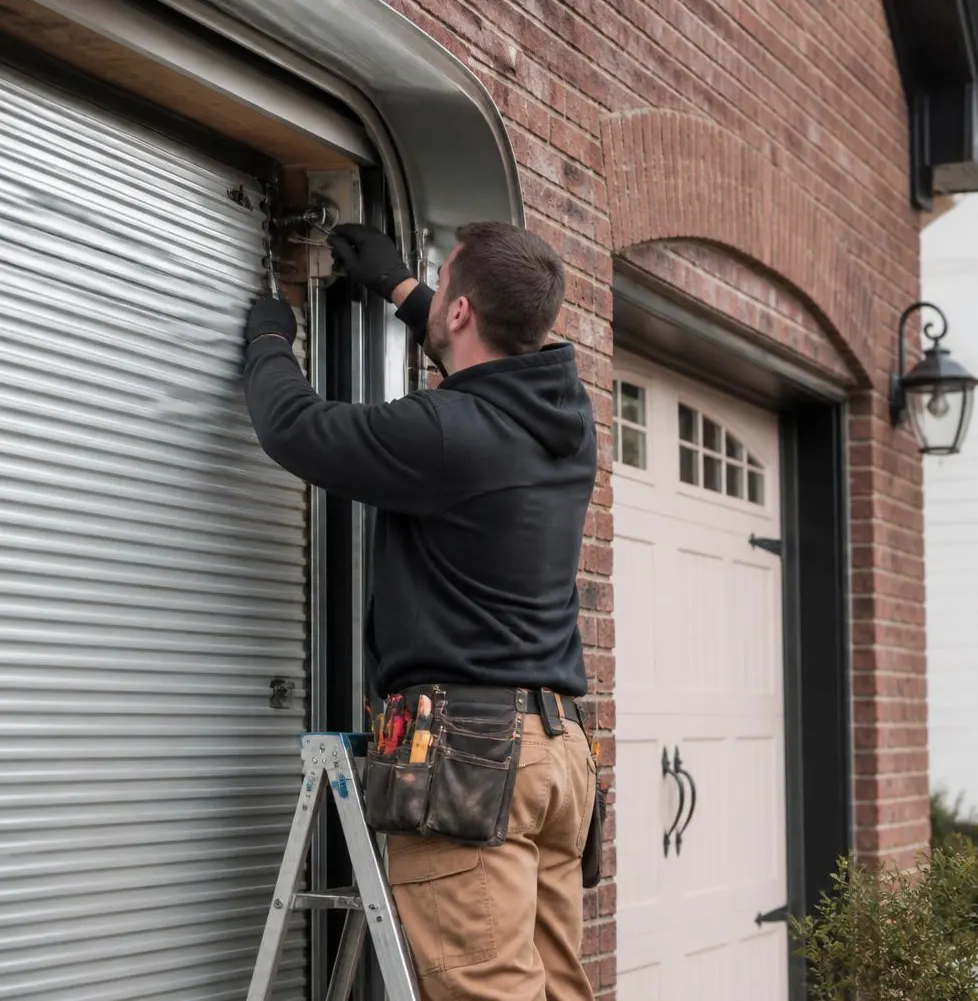
Here's the mistake almost everyone makes first: the garage door starts grinding or squealing, someone grabs the WD-40, sprays it on whatever looks shiny, and the noise quiets down for a week or two. Problem solved, right? It's tempting because it's cheap, it's fast, and it actually works — for a little while. But lubricant doesn't fix a frayed cable or a roller that's worn down to the bearing. It just buys you a quieter version of the same problem, which is exactly why this is the argument worth having before the door comes down on someone's car.
Cables and rollers are the quiet parts of your garage door system. Nobody thinks about them until they fail, and when they fail, it's rarely gradual — it's a loud bang, a door that drops crooked, or a panel that jumps off its track. The lubricant trick masks the early warning signs instead of addressing them.
What a Frayed Cable Actually Looks Like
The cables run from the bottom brackets of the door up to the drum near the spring, and they're under constant tension whenever the door is closed. A healthy cable is tightly wound and smooth. A failing one shows:
- Visible broken strands, like a frayed shoelace, near the bottom bracket or drum
- Rust spots or discoloration, especially after a rainy winter
- A cable that looks loose or slightly off the drum when the door is down
- The door sitting slightly crooked, with one side lower than the other
This is not a DIY repair. The cable is holding back the tension of a spring system designed to lift a door that can weigh over a hundred pounds. If it snaps while someone is working on it, it can cause real injury.
What Worn Rollers Sound and Feel Like
Rollers are easier to spot because the symptoms show up in how the door moves, not just how it looks:
- A grinding or scraping sound as the door travels, especially near the top or bottom of the track
- Jerky, uneven movement instead of one smooth glide
- Visible wear — cracked plastic, flat spots, or a roller that's chipped down to the metal stem
- The door wobbling slightly in the track instead of running straight
Worn rollers put extra strain on the tracks, the opener, and eventually the cables and springs, since everything has to work harder to compensate.
Why This Shows Up More in This Climate
Dry season brings dust and wildfire smoke that settles into tracks and rollers, speeding up wear and making grinding noises worse. Then winter rain introduces moisture that can rust cables and hardware, especially on older doors or garages that aren't fully sealed. The swing between a hot, dry summer and a wet winter is harder on these parts than steady weather would be, which is why a roller that was fine in August can start grinding by December.
What You Can Actually Check Yourself
- Once a month, watch the door open and close from the side — look for wobble, jerks, or a cable that looks loose
- Listen for new grinding sounds, not just loudness in general
- Check rollers for visible cracks or flat spots you can see without removing anything
- Keep the tracks wiped down if you notice dust buildup after a dry, windy stretch
What you should not do: loosen the cable, adjust the drum, or try to replace a roller near the bottom bracket where the cable is under tension. Those are spring-system adjacent repairs, and they're where most garage door injuries happen.
When to Call Walnut Garage & Gate
If you're seeing frayed strands, rust on the cables, or rollers that are visibly worn or grinding, that's the point to stop debating and call. We handle Garage Door Repair and Spring Replacement for exactly this situation — replacing worn cables and rollers before they cause a door to drop, jump track, or damage the opener. We'll also check the rest of the system while we're there, since a cable rarely fails on its own; it's usually a sign the rollers, tracks, or spring tension need attention too. A Maintenance & Safety Inspection is worth scheduling once a year if your door is past the five-year mark, especially given the dust-to-rain cycle this area goes through.
If you're in Walnut, Diamond Bar, Rowland Heights, or anywhere nearby in the San Gabriel Valley and your garage door has started making noises you can't explain, give Walnut Garage & Gate a call. We'll tell you straight whether it's a quick fix or something that needs replacing — no guesswork, no upsell.